

On-Grid vs Off-Grid vs Hybrid Solar: Which System is Right for Your Kerala Home or Business?
A plain-language comparison of the three solar system types available in Kerala — On-Grid (grid-tied net metering), Off-Grid (battery only), and Hybrid (best of both). Cost, use-case, KSEB compatibility, and our recommendation.
Disclaimer: GSR Energies is an independent solar EPC contractor empaneled for PM Surya Ghar & KSEB net-metering installations. Government policies and subsidy guidelines are referenced directly from MNRE/KSEB official notifications.
- On-Grid (grid-tied) systems have no battery, are connected to KSEB via net meter, and are the most affordable with shortest payback — ideal for homes with stable KSEB supply.
- Off-Grid systems run entirely on solar panels + batteries with no KSEB connection — suited for remote farms, waterpumps, or sites without grid access.
- Hybrid systems combine the best of both: connected to KSEB for net metering but also have battery storage for power cuts — recommended for homes with frequent outages.
- On-Grid is lowest cost (₹1.8–₹2.2 lakh for 3 kW after subsidy). Hybrid is ₹3–₹4.5 lakh for 3 kW with 5 kWh battery. Off-grid ₹1.5–₹2 lakh with lead-acid battery.
- For most Kerala urban/semi-urban households, On-Grid with net metering delivers the best financial returns. Hybrid is the right answer where outages exceed 2 hours per day.
Table of Contents
On-Grid Solar — The Optimal Choice for Most Kerala Homes
An On-Grid system has no batteries. It consists of solar panels → string inverter → KSEB bi-directional net meter. During the day, solar power runs your house. Any excess is exported to KSEB and credited to your account. At night or during cloudy weather, you draw from KSEB, deducting from your banked credits.
On-Grid systems qualify for the PM Surya Ghar DBT subsidy of up to ₹78,000 because they are the official government-approved architecture for residential net metering. The absence of batteries keeps costs low and eliminates battery replacement costs every 5-10 years.
Side-by-Side: On-Grid vs Off-Grid vs Hybrid
Use this comparison to choose the right system for your specific situation.
| Feature | On-Grid | Off-Grid | Hybrid |
|---|---|---|---|
| KSEB Connection | Required | Not Required | Optional |
| Battery | None | Yes (Lead/Li) | Yes (LiFePO4) |
| Works During Power Cut | No | Yes | Yes |
| Net Metering | Yes | No | Yes |
| Subsidy Eligible | Yes (₹78,000) | No | Partial |
| 3 kW System Cost (approx) | ₹1.8–₹2.2L after subsidy | ₹1.5–₹2L | ₹3–₹4.5L |
| Payback Period | 3–4 years | 5–8 years | 5–6 years |
| Best For | Urban / stable grid | Remote / no grid | Outage-prone areas |
Kerala Rooftop Solar & KSEB Implementation Impact
How these regulations, technical specifications, and standards apply specifically to homes and commercial setups connected to the Kerala State Electricity Board (KSEBL) grid:
- Urban Kochi, Kozhikode, Thiruvananthapuram: On-Grid systems with net metering deliver near-zero bills and 3-4 year payback.
- Rural Idukki, Wayanad, Malappuram: Hybrid systems with LiFePO4 batteries provide both savings and power backup during frequent KSEB outages.
- Agricultural pumps / remote plots: Off-Grid systems with adequate battery banks power irrigation and lighting without any KSEB dependency.
Frequently Asked Questions
Can I upgrade from On-Grid to Hybrid later?
Yes. You can retrofit a battery storage system and a hybrid inverter to an existing on-grid plant, though this requires replacing the inverter. GSR Energies designs all on-grid installations with hybrid upgrade compatibility in mind.
Internal Solar Resources for Kerala
Explore Helpful Kerala Solar Tools & Guides
Kerala Solar Subsidy Calculator
Calculate system sizing, monthly savings & PM Surya Ghar subsidy
KSEB Net Metering Regulations
Full step-by-step application walkthrough for KSEBL bi-directional meters
Residential Rooftop Solar Solutions
On-grid, hybrid, and battery storage turnkey installation packages
Free Kerala Rooftop Site Assessment
Request shadow analysis & personalized engineering feasibility study
Free Solar Proposal For Your Roof
Planning Solar for Your Home or Business in Kerala?
Get an accurate rooftop survey, shadow analysis, and subsidy calculation — with zero charges and zero obligation.
Related Solar Guides & News
Solar Technology & Hardware
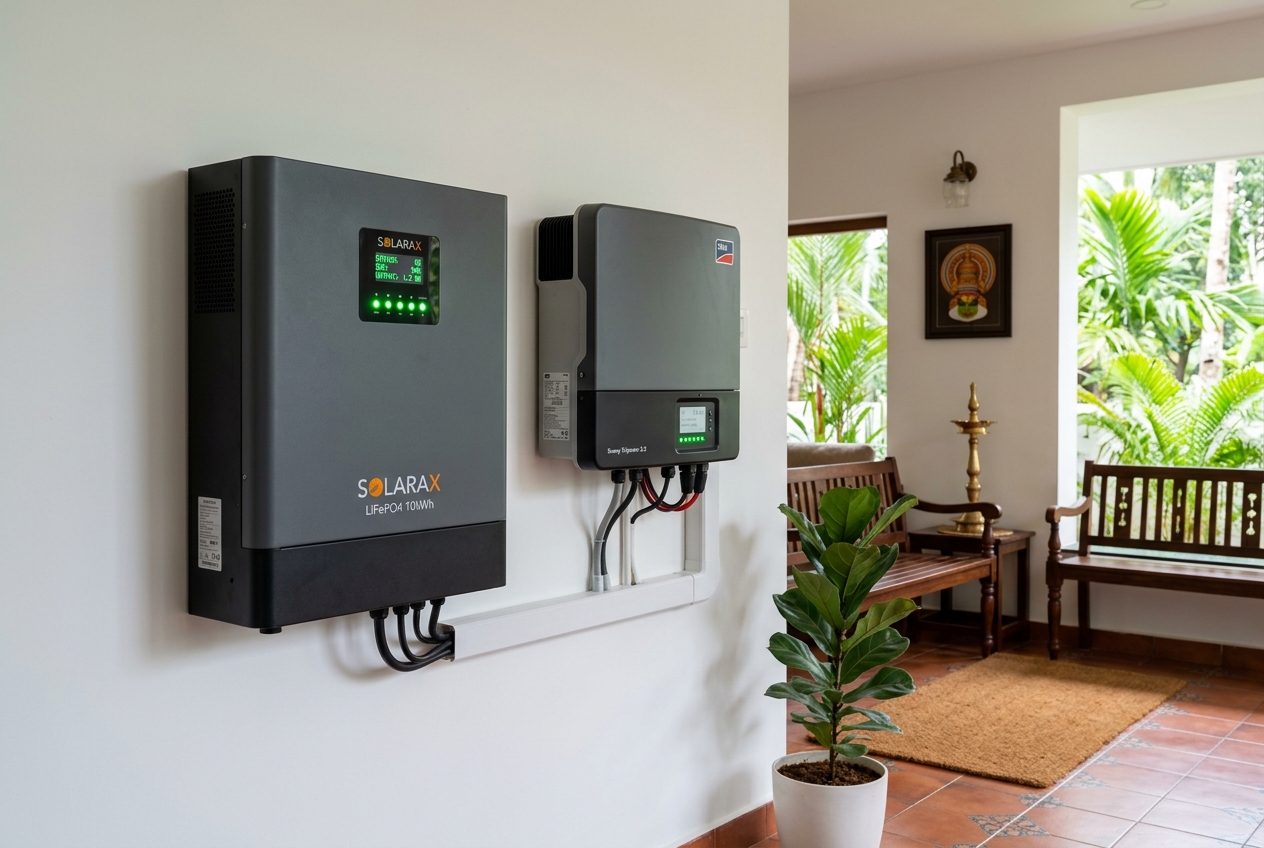
Hybrid Solar Systems with LiFePO4 Storage: Grid-Interactive Inverters & Power Outage Protection
Read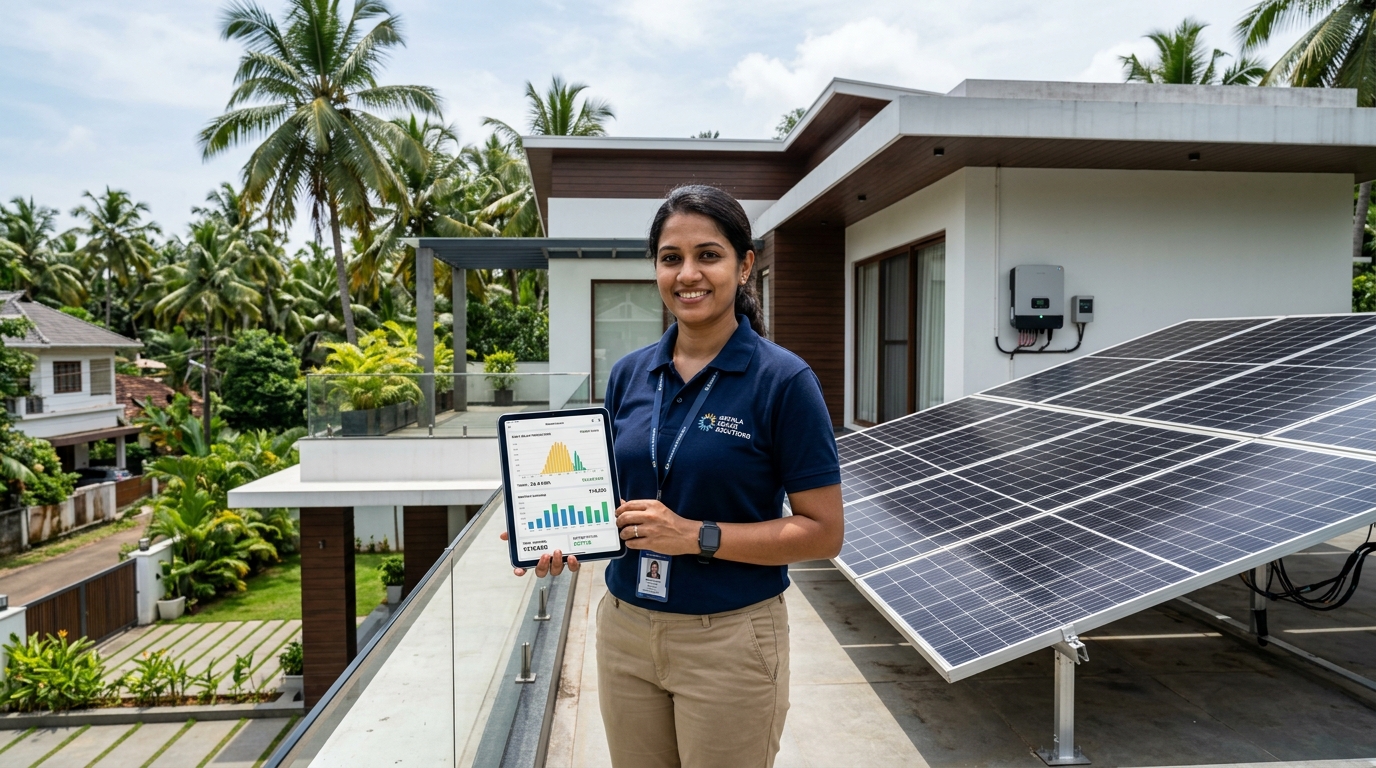
Sizing, Savings & ROI
Solar System Sizing & Payback Period in Kerala: Slabs, Peak Sun Hours & 25-Year Compounding Returns
Read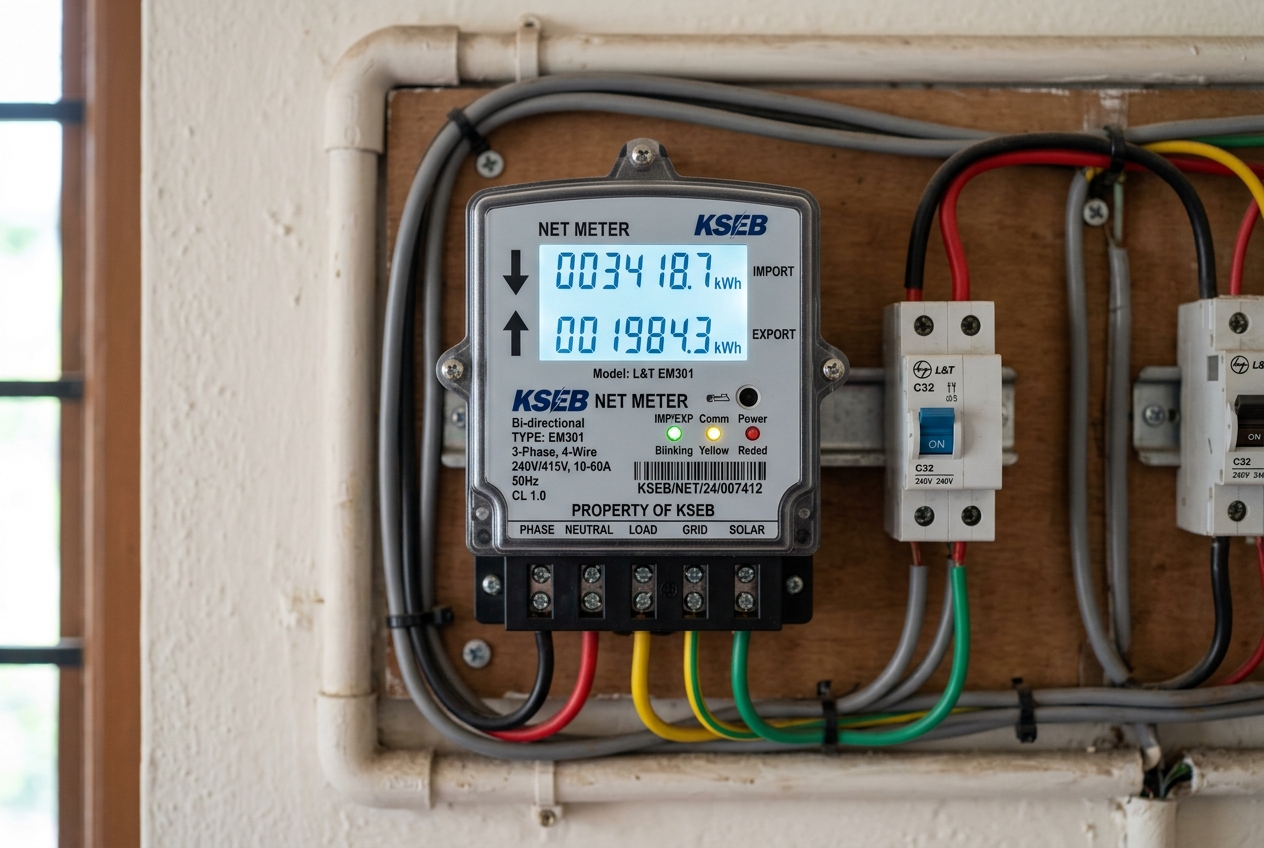
KSEB & Kerala Regulations