
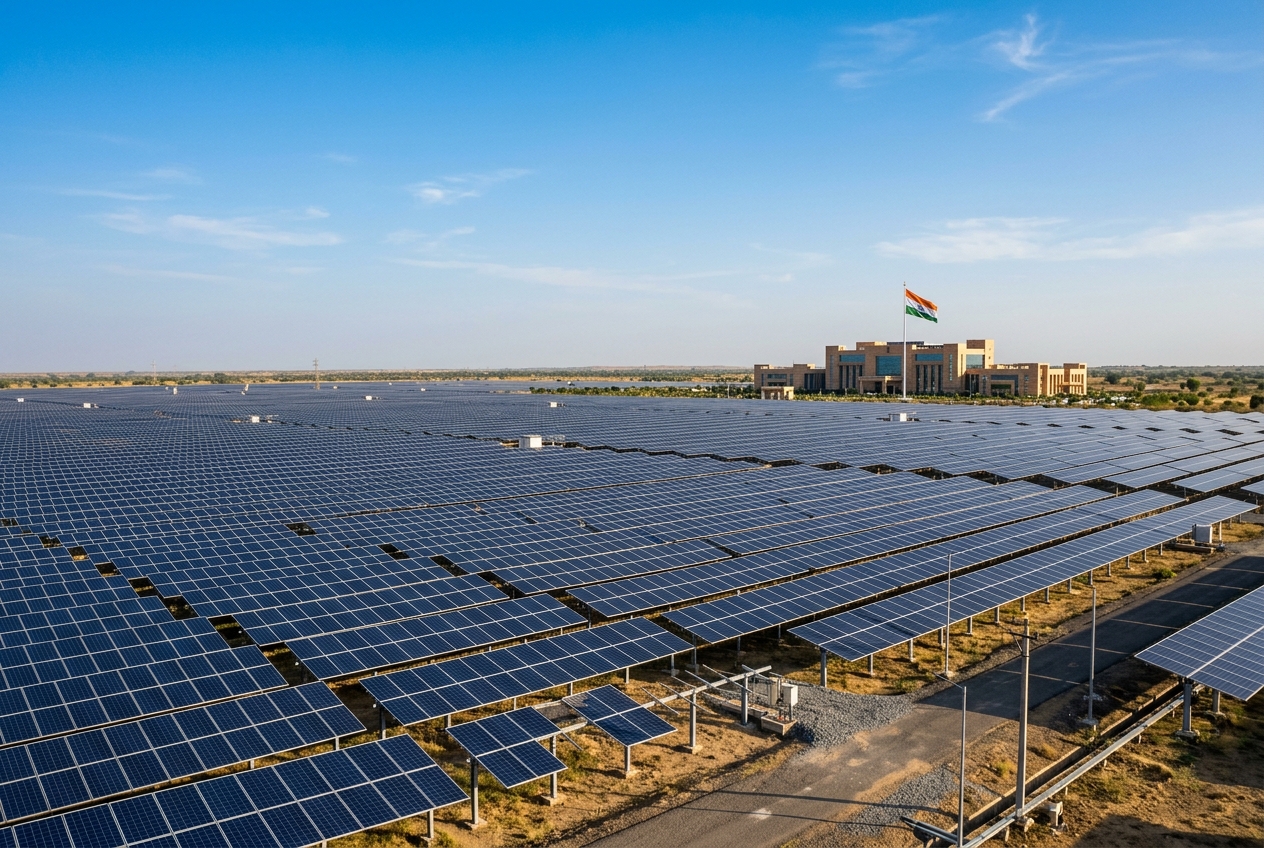
India's 500 GW Renewable Energy Mission: Solar Progress, State Targets & What It Means for Kerala
India is racing toward 500 GW of non-fossil energy capacity by 2030. How much has been achieved, what role does rooftop solar play, and how Kerala homeowners can directly participate in this national mission.
Disclaimer: GSR Energies is an independent solar EPC contractor empaneled for PM Surya Ghar & KSEB net-metering installations. Government policies and subsidy guidelines are referenced directly from MNRE/KSEB official notifications.
- India has committed to 500 GW of non-fossil fuel installed electricity capacity by 2030 as part of its Nationally Determined Contributions (NDCs) to the Paris Agreement.
- As of 2025, India has crossed 190 GW of renewable energy capacity — with solar PV constituting the fastest-growing segment at 85+ GW.
- PM Surya Ghar scheme alone targets 1 crore (10 million) residential rooftop solar installations by 2027.
- Kerala has set a state-specific target of 2,500 MW of solar capacity, with KSEB Soura scheme fast-tracking rooftop connections.
- Domestic solar manufacturing (DCR modules) is now mandatory for government and subsidy projects to reduce China dependency.
Table of Contents
India's 500 GW Mission — The Biggest Clean Energy Commitment in Asia
At COP26 in Glasgow, India pledged to install 500 GW of non-fossil fuel electricity generation capacity by 2030, meet 50% of its total energy requirements from renewable sources, and reduce the total projected carbon emissions by 1 billion tonnes by 2030. This is now encoded in India's official Nationally Determined Contributions (NDCs) submitted to the United Nations Framework Convention on Climate Change (UNFCCC).
Solar power is the primary vehicle for achieving this target. The Ministry of New & Renewable Energy (MNRE) has set a 280 GW solar target by 2030, of which at least 40 GW is earmarked specifically for rooftop solar installations on residential, commercial, and industrial buildings.
Kerala's Rooftop Solar Push — KSEB Soura & State Policy
The Kerala government, through KSEB's dedicated Soura wing, has streamlined the rooftop solar approval process to a fully online, single-window system. A homeowner applies through the national portal (pmsuryaghar.gov.in), receives KSEB feasibility approval, gets installation completed by an empanelled agency, and receives DBT subsidy — all without stepping into a government office.
The Kerala State Electricity Regulatory Commission (KSERC) has also issued progressive net metering regulations that allow consumers to bank excess solar units across the full annual October-September cycle, making Kerala one of the most consumer-friendly net metering regimes in India.
Kerala Rooftop Solar & KSEB Implementation Impact
How these regulations, technical specifications, and standards apply specifically to homes and commercial setups connected to the Kerala State Electricity Board (KSEBL) grid:
- Kerala households installing rooftop solar now directly contribute to India's 500 GW national mission and receive maximum government support.
- KSEB Soura rooftop scheme integrates Kerala homeowners into the state renewable portfolio, ensuring grid-priority for solar injections.
- Kerala's high electricity consumption and 300+ sunny days make rooftop solar the single highest-ROI private investment available today.
Frequently Asked Questions
Will India actually achieve 500 GW by 2030?
India added 18.5 GW of solar in 2023-24 alone. With aggressive policy push, manufacturing PLI schemes, and PM Surya Ghar targeting 10 million homes, reaching 280 GW solar by 2030 is considered achievable by most energy analysts.
Does installing rooftop solar in Kerala help India's clean energy targets?
Yes — every kilowatt of rooftop solar you install is counted toward India's renewable energy installed base and reduces fossil fuel imports.
Internal Solar Resources for Kerala
Explore Helpful Kerala Solar Tools & Guides
Kerala Solar Subsidy Calculator
Calculate system sizing, monthly savings & PM Surya Ghar subsidy
KSEB Net Metering Regulations
Full step-by-step application walkthrough for KSEBL bi-directional meters
Residential Rooftop Solar Solutions
On-grid, hybrid, and battery storage turnkey installation packages
Free Kerala Rooftop Site Assessment
Request shadow analysis & personalized engineering feasibility study
Free Solar Proposal For Your Roof
Planning Solar for Your Home or Business in Kerala?
Get an accurate rooftop survey, shadow analysis, and subsidy calculation — with zero charges and zero obligation.
Related Solar Guides & News

Central Schemes & Subsidies
PM Surya Ghar Muft Bijli Yojana in Kerala: 2026 Subsidy Structure, KSEB Feasibility & Application Guide
Read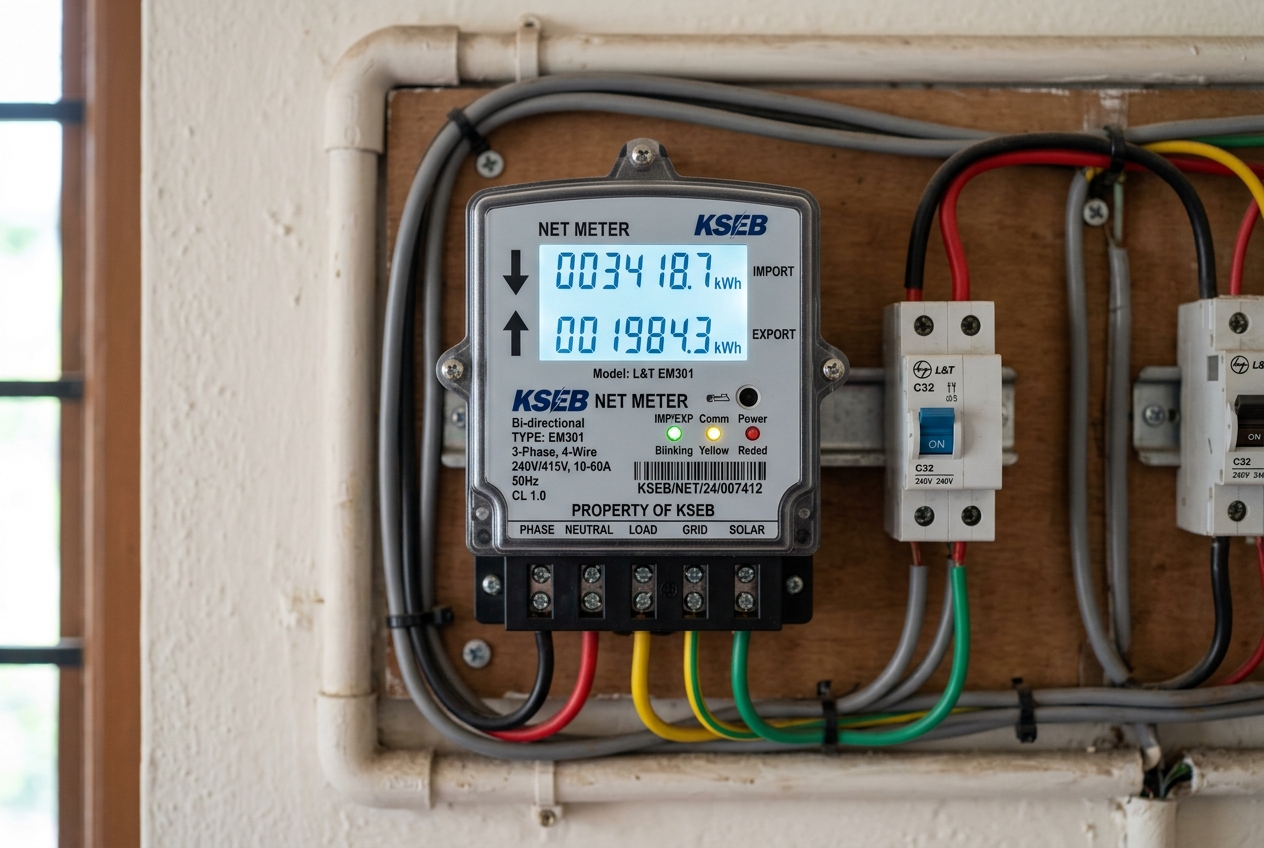
KSEB & Kerala Regulations
KSEB Solar Net Metering Explained: Bi-Directional Billing, Banking Rules & KSERC Tariff Settlement
Read
Commercial & Industrial Solar