
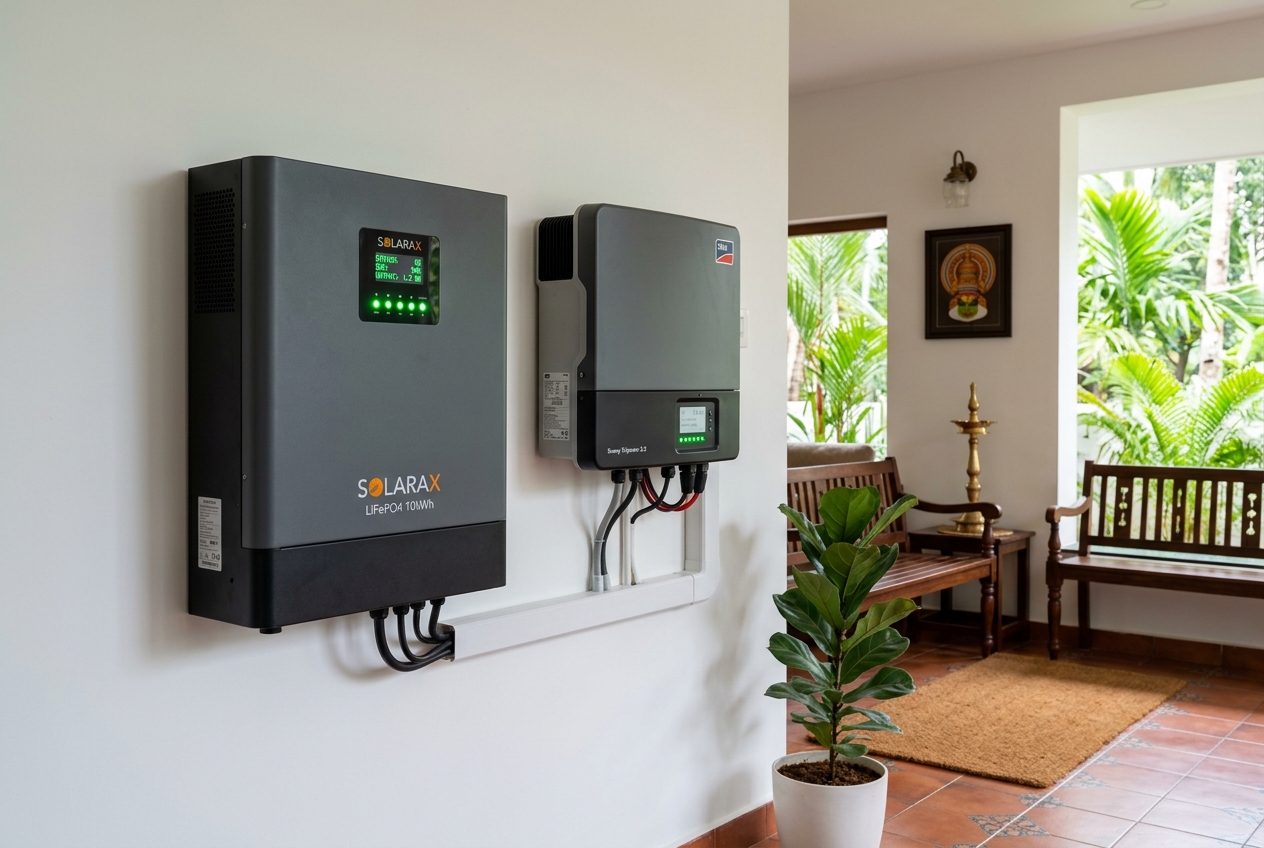
Hybrid Solar Systems with LiFePO4 Storage: Grid-Interactive Inverters & Power Outage Protection
How hybrid solar systems combine net metering with lithium iron phosphate (LiFePO4) energy storage to deliver continuous 24/7 power during KSEB transmission outages and weather disruptions.
Disclaimer: GSR Energies is an independent solar EPC contractor empaneled for PM Surya Ghar & KSEB net-metering installations. Government policies and subsidy guidelines are referenced directly from MNRE/KSEB official notifications.
- Standard on-grid solar shuts down during KSEB blackouts to prevent electrocuting line workers (anti-islanding safety).
- A Hybrid Solar System incorporates an intelligent bidirectional inverter and battery bank with sub-20ms automatic transfer switch (ATS).
- Lithium Iron Phosphate (LiFePO4) chemistry delivers 6,000+ cycles at 80% Depth of Discharge (DoD), lasting 12 to 15 years with zero maintenance.
- Replaces noisy, polluting diesel or petrol generators with zero-emission, silent clean solar backup.
- Enables Time-of-Day (ToD) peak shaving to store cheap solar energy by day and power evening loads without drawing high-tariff grid power.
Table of Contents
Hybrid Solar vs Standard On-Grid: The Blackout Dilemma
Many first-time solar buyers in Kerala are surprised to learn that a standard on-grid solar plant does not produce a single watt when the KSEB power grid goes down. This shutdown is legally required by utility anti-islanding regulations to prevent back-feeding live electricity into lines where linemen are repairing faults.
A Hybrid Solar System solves this dilemma cleanly. The hybrid inverter physically disconnects from the grid via an internal mechanical transfer switch in under 20 milliseconds (faster than an eye blink) and continues generating power for your dedicated critical home loads from the solar panels and battery bank simultaneously.
Battery Chemistry: Lithium Iron Phosphate (LiFePO4) vs Tubular Lead-Acid
Traditional home inverters in Kerala relied on heavy tubular lead-acid batteries. While inexpensive initially, lead-acid batteries suffer from low cycle life (800–1200 cycles), hazardous acid fumes, mandatory periodic distilled water topping, and severe capacity loss when discharged below 50%.
Modern GSR Hybrid Systems use Lithium Iron Phosphate (LiFePO4) prismatic cells. LiFePO4 is thermally stable, cannot catch fire from thermal runaway, requires zero maintenance, supports high charging rates, and provides 6,000+ cycles, translating to 12 to 15 years of daily service life.
| Parameter | Tubular Lead-Acid Battery | LiFePO4 Lithium Battery (GSR Standard) |
|---|---|---|
| Cycle Life (at 80% DoD) | 800 – 1,200 cycles (2 – 4 years) | 6,000+ cycles (12 – 15 years) |
| Usable Capacity (DoD) | 50% recommended | 90% – 95% usable depth of discharge |
| Round-Trip Efficiency | 70% – 75% | 95% – 98% (Virtually zero energy lost) |
| Maintenance | Monthly distilled water topping | 100% Maintenance-free hermetic enclosure |
| Fumes & Safety | Acid fumes & hydrogen gas discharge | Zero emissions, safe for indoor living rooms |
| Space & Weight | Heavy (65 kg per 150Ah unit) | Compact & wall-mountable (1/3rd weight) |
Sizing a Hybrid Battery Bank for Kerala Homes
A typical 3-bedroom to 4-bedroom home in Kerala requires approximately 5 kWh to 10 kWh of usable storage to power lights, fans, refrigerator, internet router, television, and one 1.5-ton 5-star inverter air conditioner overnight.
For a 5 kW hybrid system, a 5.12 kWh or 10.24 kWh 48V/51.2V modular LiFePO4 rack is typical. Because the system is modular, homeowners can start with 5 kWh and add another battery pack later without changing the inverter.
Kerala Rooftop Solar & KSEB Implementation Impact
How these regulations, technical specifications, and standards apply specifically to homes and commercial setups connected to the Kerala State Electricity Board (KSEBL) grid:
- Provides uninterrupted power during Kerala monsoon storms when fallen tree branches routinely cut overhead 11kV rural feeders for hours or days.
- Safeguards sensitive household electronic equipment, air conditioners, water pumps, refrigeration, and home-office equipment.
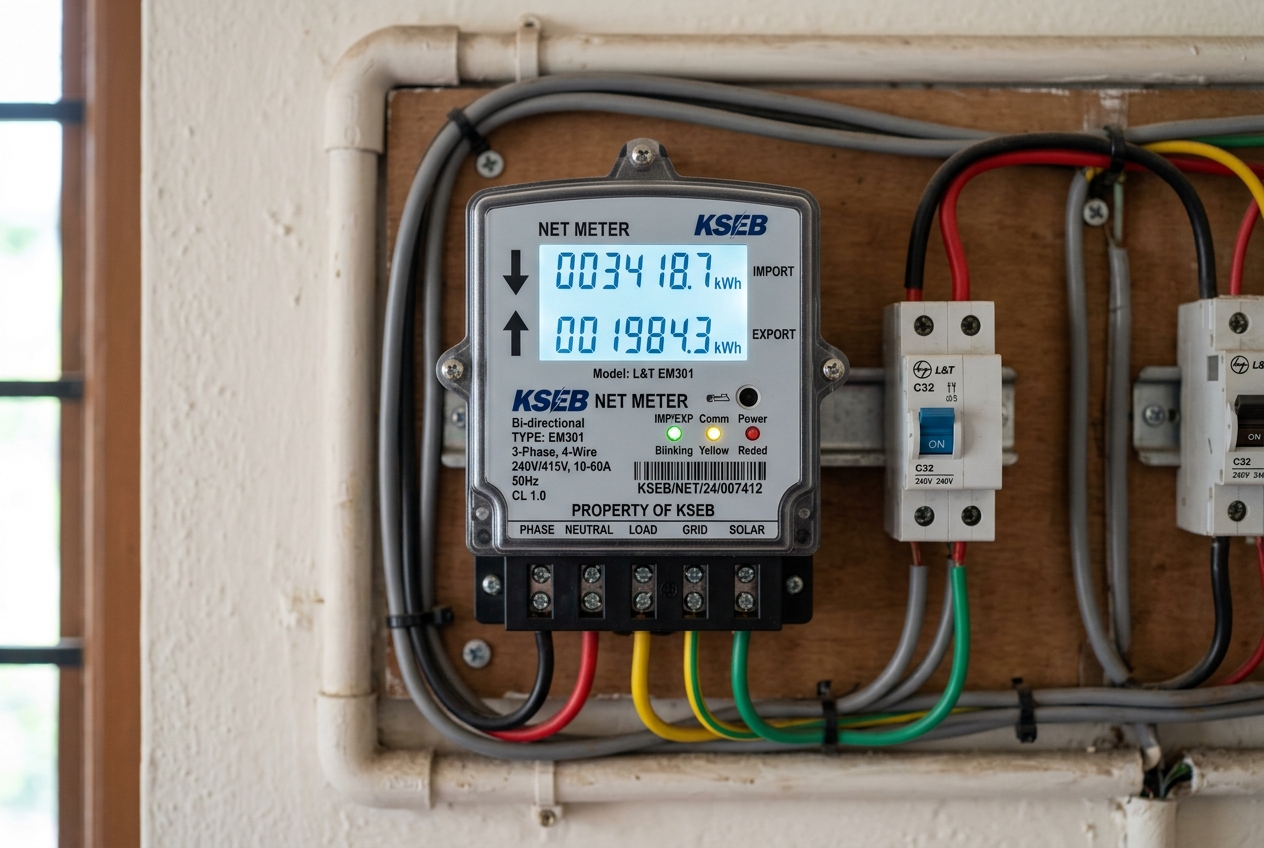
- Operates seamlessly with KSEB net meters, allowing surplus export when batteries are 100% fully charged.
Frequently Asked Questions
Can a hybrid solar system export excess electricity to KSEB for net metering credits?
Yes. Modern hybrid inverters prioritize: (1) Self-consumption for home loads, (2) Charging the battery to 100%, and (3) Exporting all remaining surplus power into the KSEB grid for net billing credits.
Can PM Surya Ghar subsidy be claimed on a Hybrid Solar System?
The central government subsidy applies to the rooftop solar generation capacity (inverter + DCR modules) up to ₹78,000. The battery storage component is funded separately as an optional upgrade by the homeowner.
Internal Solar Resources for Kerala
Explore Helpful Kerala Solar Tools & Guides
Kerala Solar Subsidy Calculator
Calculate system sizing, monthly savings & PM Surya Ghar subsidy
KSEB Net Metering Regulations
Full step-by-step application walkthrough for KSEBL bi-directional meters
Residential Rooftop Solar Solutions
On-grid, hybrid, and battery storage turnkey installation packages
Free Kerala Rooftop Site Assessment
Request shadow analysis & personalized engineering feasibility study
Free Solar Proposal For Your Roof
Planning Solar for Your Home or Business in Kerala?
Get an accurate rooftop survey, shadow analysis, and subsidy calculation — with zero charges and zero obligation.
Related Solar Guides & News
KSEB & Kerala Regulations
KSEB Solar Net Metering Explained: Bi-Directional Billing, Banking Rules & KSERC Tariff Settlement
Read
Central Schemes & Subsidies
PM Surya Ghar Muft Bijli Yojana in Kerala: 2026 Subsidy Structure, KSEB Feasibility & Application Guide
Read
Maintenance & Performance